In the early hours of a long night, when ideas blur and focus becomes fragile, small comforts often make the biggest difference. For some founders, it is the familiar glow of a laptop screen. For others, it is the ritual of working in pyjamas, free from the stiffness of formal wear. Somewhere in this intersection of comfort and productivity, pyjamaspapper emerged—not as a loud disruption, but as a thoughtful response to how modern work, creativity, and material culture are evolving.
Unlike trends that explode overnight, pyjamaspapper has grown quietly, discussed in niche design circles and forward-thinking business rooms before making its way into broader conversations. It represents more than a physical material; it reflects a mindset that values ease, sustainability, and human-centered design without sacrificing professionalism or performance.
Understanding Pyjamaspapper in a Modern Context
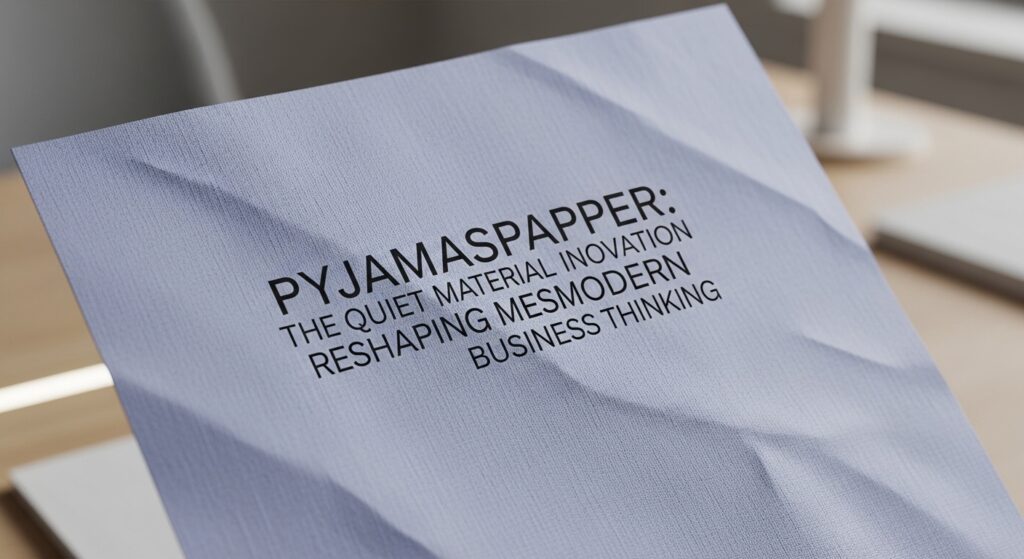
Pyjamaspapper can best be understood as a conceptual material category rather than a single patented product. It blends the tactile softness associated with comfort-focused fabrics and the functional reliability of structured paper-based materials. In business terms, it sits at the crossroads of packaging innovation, workspace design, and brand expression.
What makes pyjamaspapper relevant today is the shift in how people work and consume. Remote work normalized informality, but expectations around quality and durability did not disappear. Brands needed materials that felt approachable yet credible. Pyjamaspapper answered that need by offering a surface that communicates calm, trust, and understated intelligence.
Why Entrepreneurs Are Paying Attention
For entrepreneurs and founders, materials are rarely just materials. They are signals. Pyjamaspapper signals that a company understands its audience on a human level. It suggests warmth without being casual to the point of carelessness. In pitch decks, packaging, internal documentation, and even limited-edition products, this balance is powerful.
From a strategic standpoint, pyjamaspapper aligns with lean thinking. It is adaptable, cost-conscious, and versatile across use cases. Startups often operate under tight constraints, and adopting materials that can serve multiple purposes without rebranding fatigue is a competitive advantage. Pyjamaspapper allows brands to feel cohesive without feeling rigid.
The Sustainability Angle That Actually Resonates
Sustainability conversations often fail because they sound performative. Pyjamaspapper, by contrast, tends to be discussed in practical terms. Its paper-forward nature supports recyclability, while its design philosophy encourages longevity rather than disposability.
What resonates with decision-makers is not just environmental benefit, but narrative clarity. Using pyjamaspapper allows companies to say, implicitly, that they value restraint. They are not chasing gloss for attention; they are choosing materials that feel responsible and considered. This subtlety matters in markets where consumers are increasingly skeptical of loud green claims.
Pyjamaspapper as a Branding Tool
Branding is no longer about shouting the loudest. It is about being remembered for the right reasons. Pyjamaspapper contributes to brand memory through texture, tone, and emotional association. When someone interacts with it, the experience feels intentional and calming.
This is especially relevant in industries where trust is essential. Financial tools, digital services, and B2B platforms often struggle to feel approachable. Introducing pyjamaspapper-inspired materials into their physical or hybrid touchpoints softens the experience. It makes complex ideas feel more accessible without diluting authority.
Comparing Pyjamaspapper with Conventional Materials
To understand where pyjamaspapper adds value, it helps to compare it with more traditional options. The differences are not only physical but experiential.
| Aspect | Conventional Paper Materials | Pyjamaspapper |
|---|---|---|
| Tactile Feel | Crisp, often rigid | Soft, calming, flexible |
| Brand Impression | Formal, sometimes distant | Approachable yet professional |
| Sustainability Perception | Depends on sourcing | Generally viewed as thoughtful |
| Use Cases | Documents, packaging | Branding, packaging, creative assets |
| Emotional Response | Neutral | Comfort-driven, memorable |
This comparison highlights why pyjamaspapper is gaining attention among tech readers and founders. It adds an emotional layer that conventional materials often lack.
Real-World Relevance in Hybrid Work Culture
Hybrid work blurred boundaries between personal and professional spaces. Pyjamaspapper fits naturally into this reality. It feels at home on a home office desk just as much as in a formal meeting room. This adaptability mirrors how modern professionals live and work.
From an operational perspective, using materials that align with hybrid culture reduces friction. Employees feel more comfortable engaging with internal resources, while clients sense a brand that understands contemporary work rhythms. Pyjamaspapper becomes a quiet facilitator of better interactions.
Expert Insight: Why Softness Is Strategic
Design experts often emphasize that softness is not weakness. In material psychology, softer textures reduce cognitive load and increase openness. Pyjamaspapper leverages this principle. It invites engagement rather than demanding attention.
For tech-driven companies, this is particularly valuable. Complex products require trust before understanding. Materials that subconsciously relax the user make it easier for messages to land. Pyjamaspapper supports this by acting as a bridge between complexity and clarity.
Challenges and Misconceptions
Despite its strengths, pyjamaspapper is sometimes misunderstood. Critics assume that anything associated with comfort lacks seriousness. This misconception usually fades once the material is experienced firsthand. The professionalism of pyjamaspapper lies in its restraint, not in flashy finishes.
Another challenge is misuse. When over-applied or paired with inconsistent branding, its subtle power can be diluted. Like any strategic asset, pyjamaspapper works best when integrated thoughtfully, not treated as a gimmick.
The Future Outlook for Pyjamaspapper
Looking ahead, pyjamaspapper is likely to evolve alongside material science and brand strategy. As businesses continue to prioritize human-centered experiences, demand for materials that communicate empathy and intelligence will grow.
What makes pyjamaspapper future-ready is its flexibility. It can adapt to new production methods, digital-physical hybrids, and evolving sustainability standards without losing its core identity. This resilience is exactly what founders and entrepreneurs look for when making long-term decisions.
Conclusion
Pyjamaspapper does not try to dominate attention. Instead, it earns it. In a market saturated with aggressive branding and overstated innovation, its calm presence feels refreshing. For entrepreneurs, tech readers, and founders, it offers a reminder that progress does not always need to be loud.
By embracing businesses signal maturity, empathy, and confidence in their vision. It is a material choice that reflects a broader philosophy: that comfort and credibility can coexist, and that sometimes the most powerful statements are made softly.